
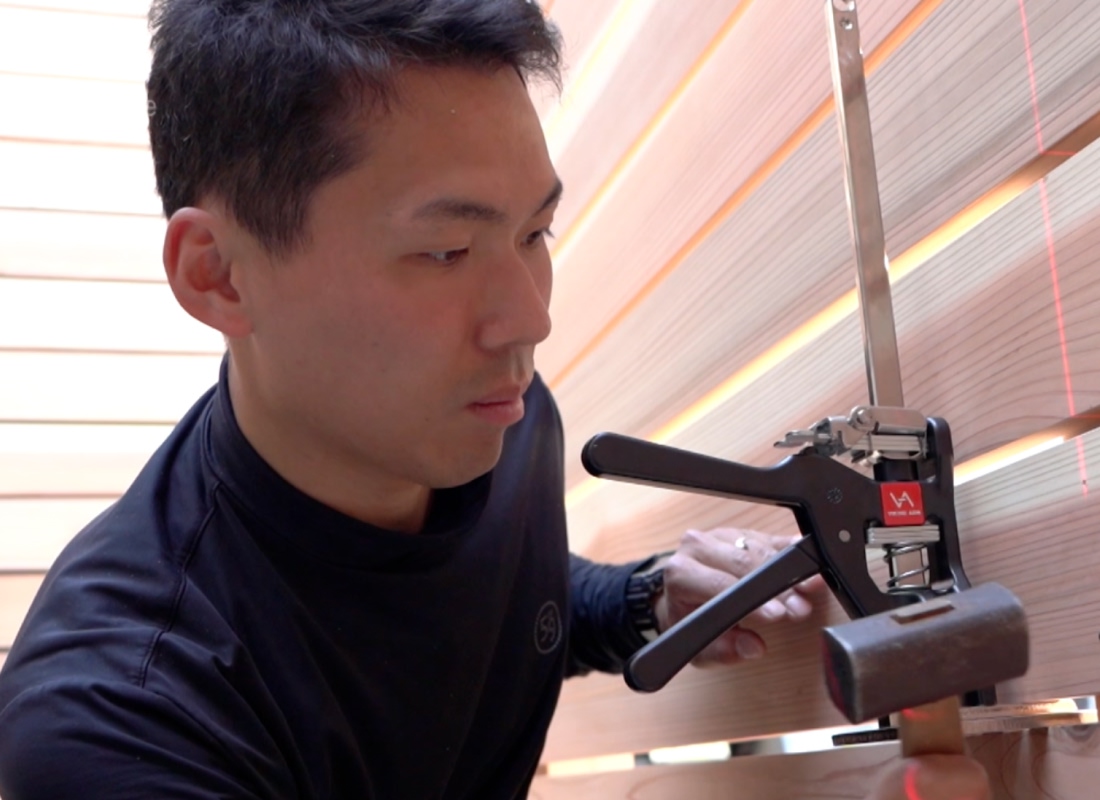
Cedar Fence for a Machiya Stay


Project Overview
A compact outdoor space redefined through a simple wooden fence.
Designed and built for Satoyama Experience, this project creates a private enclosure within a tightly packed machiya context—allowing both guestsand their dogs to move freely while feeling protected.

Context
The house sits within a traditional machiya neighborhood, where buildings are closely spaced and visual boundaries are minimal.
The request was:
- Create a space where dogs can run safely
- Ensure privacy from neighboring houses
- Keep the design natural and quiet
The challenge was to introduce separation without breaking the atmosphere of the place.
Materials
- Local Hinoki — used for structural pillars
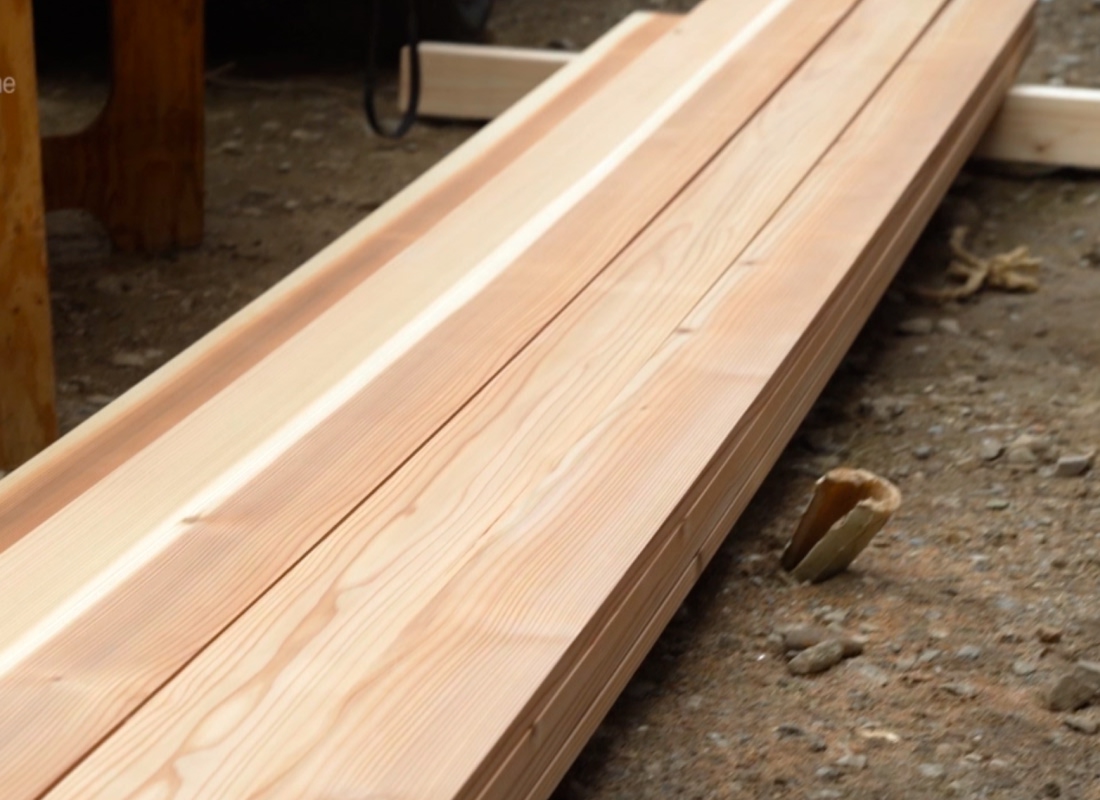
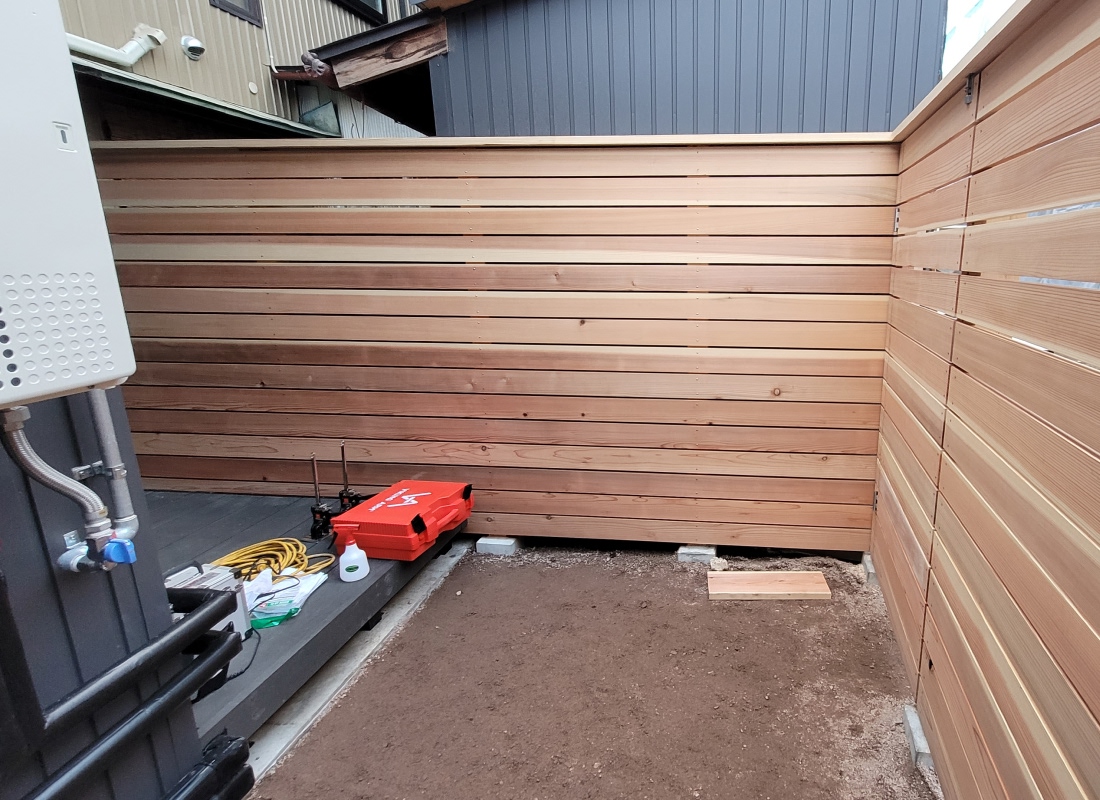
- Local Cedar — used for horizontal boards
Both materials were selected for their warmth, scent, and ability to age naturally over time.
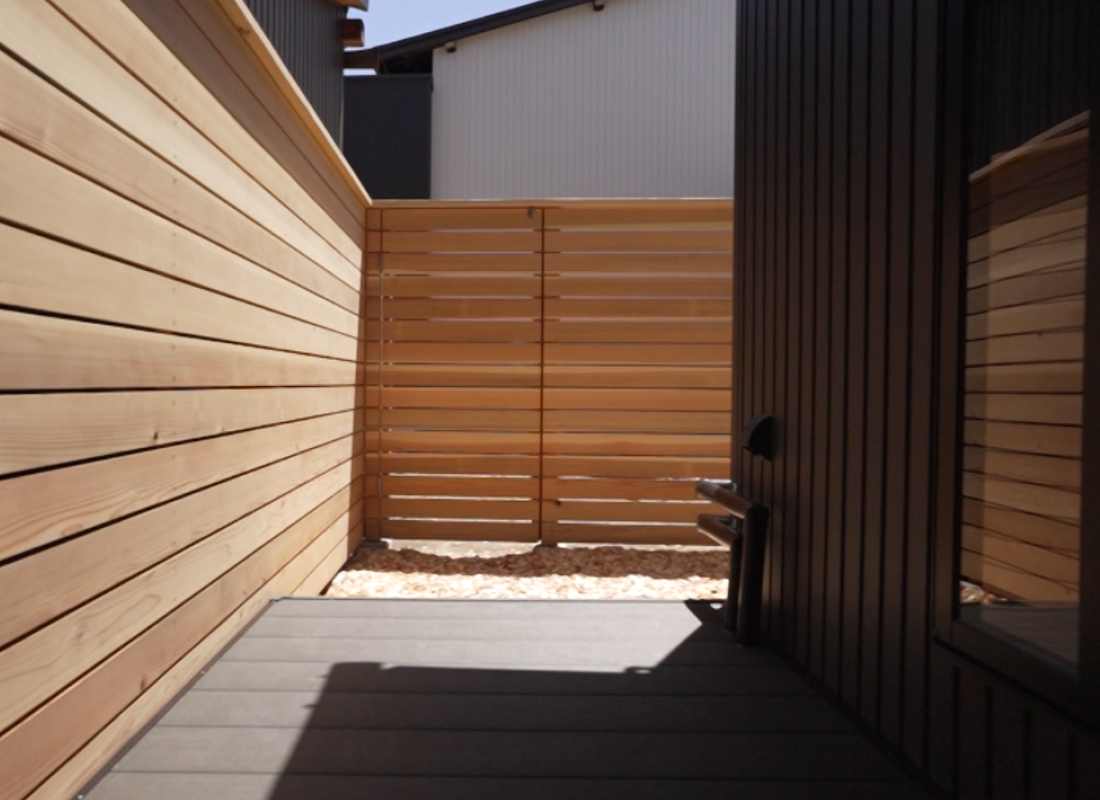
The contrast between hinoki structure and cedar surface creates subtle depth without adding complexity.
Craft & Joinery
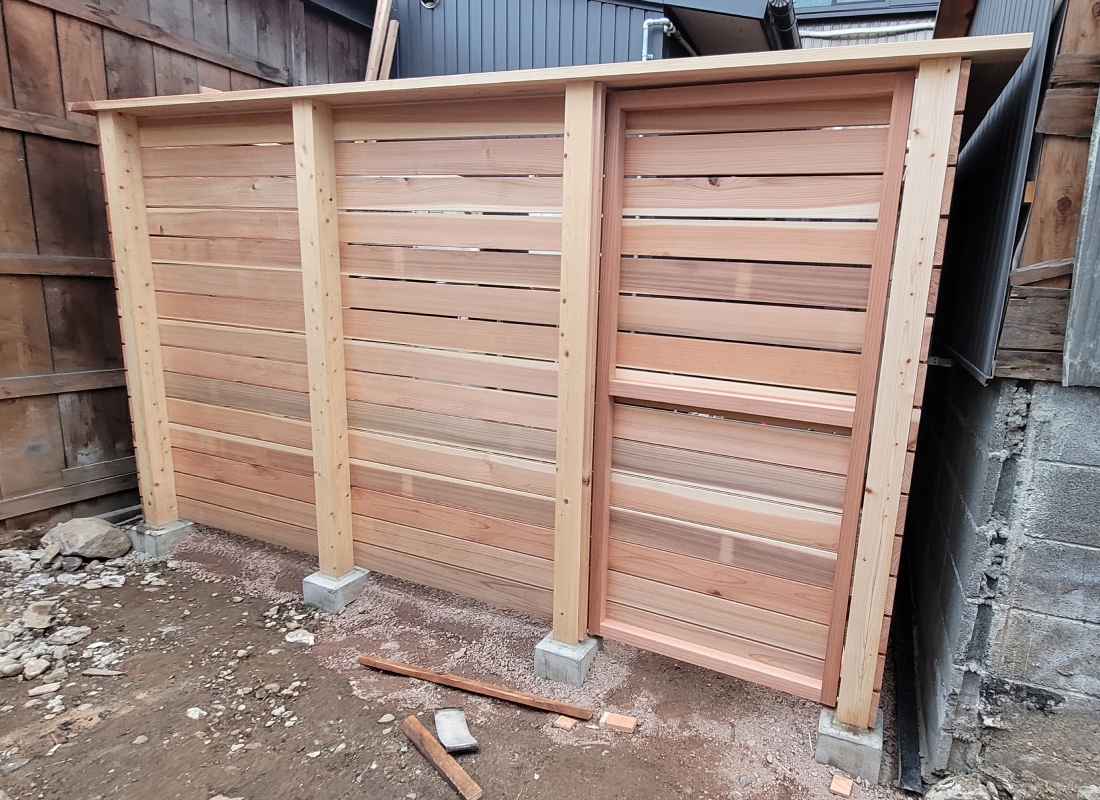
The fence is built with a clear rhythm of vertical posts and horizontal boards, keeping the expression calm and consistent.
Particular attention was given to:
- The alignment of boards across the entire surface
- The spacing between boards for light and airflow
- The integration of the door within the same language
The gate was designed to disappear into the fence—reading as one continuous surface rather than a separate element.

Technical Challenges
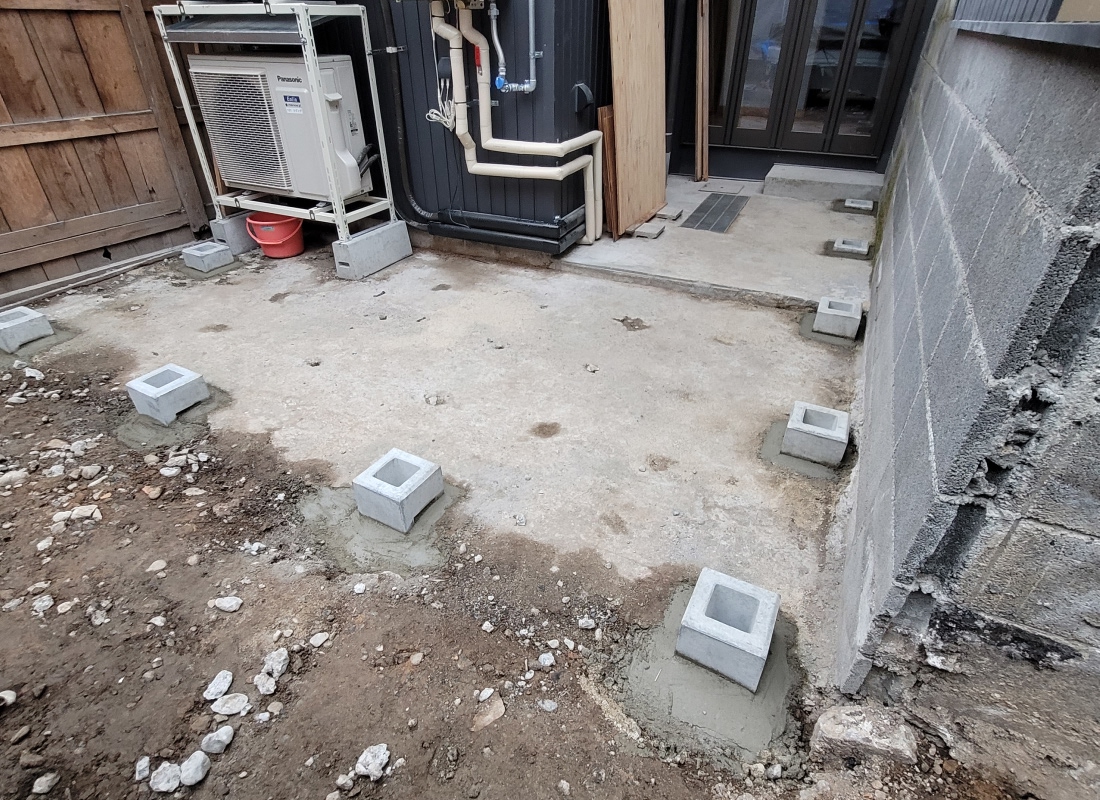
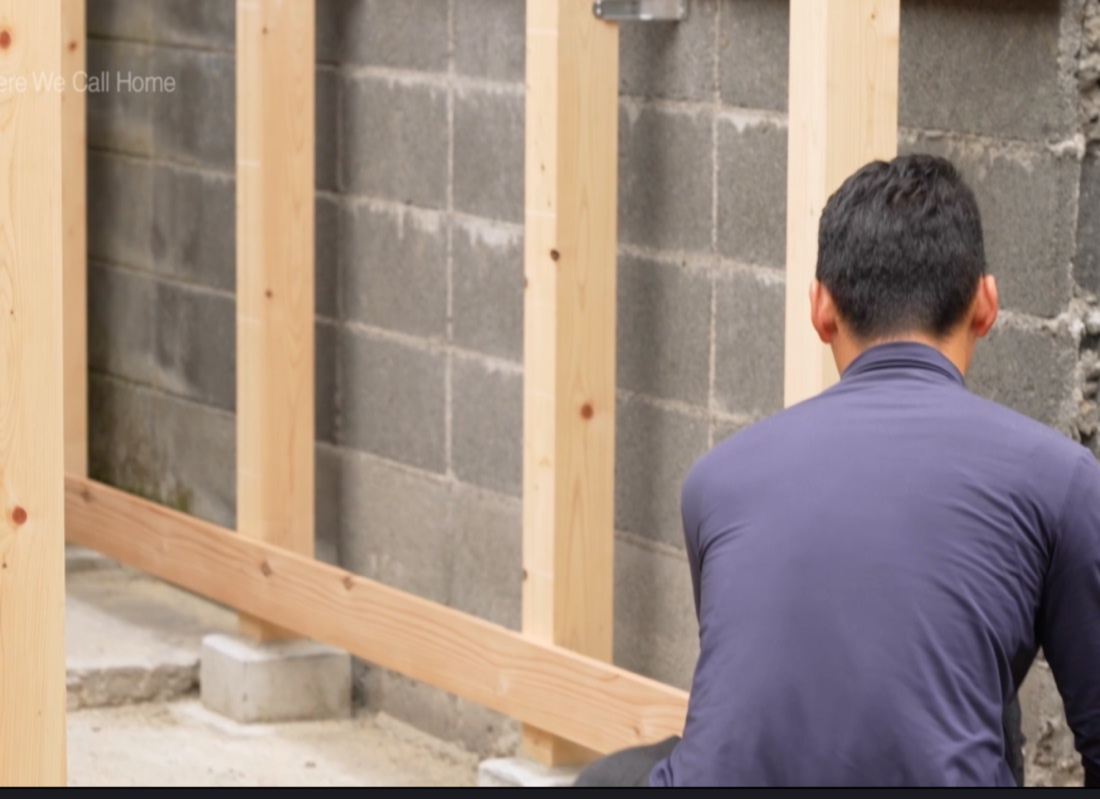
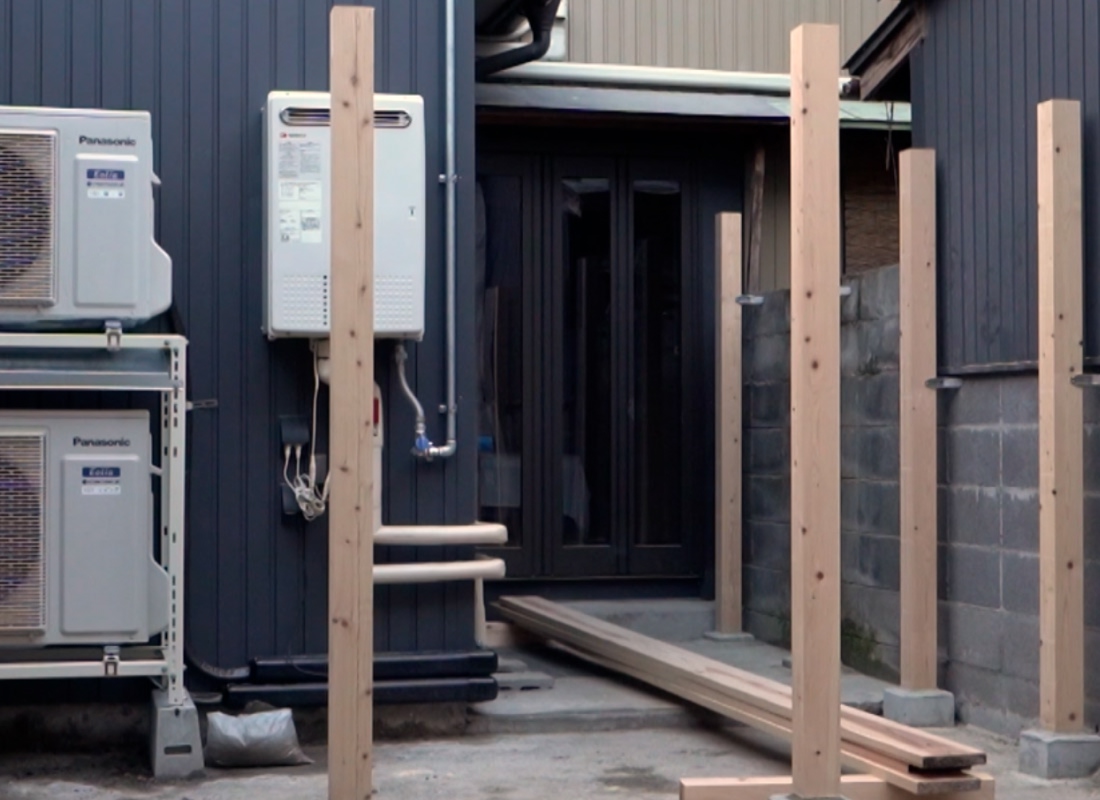
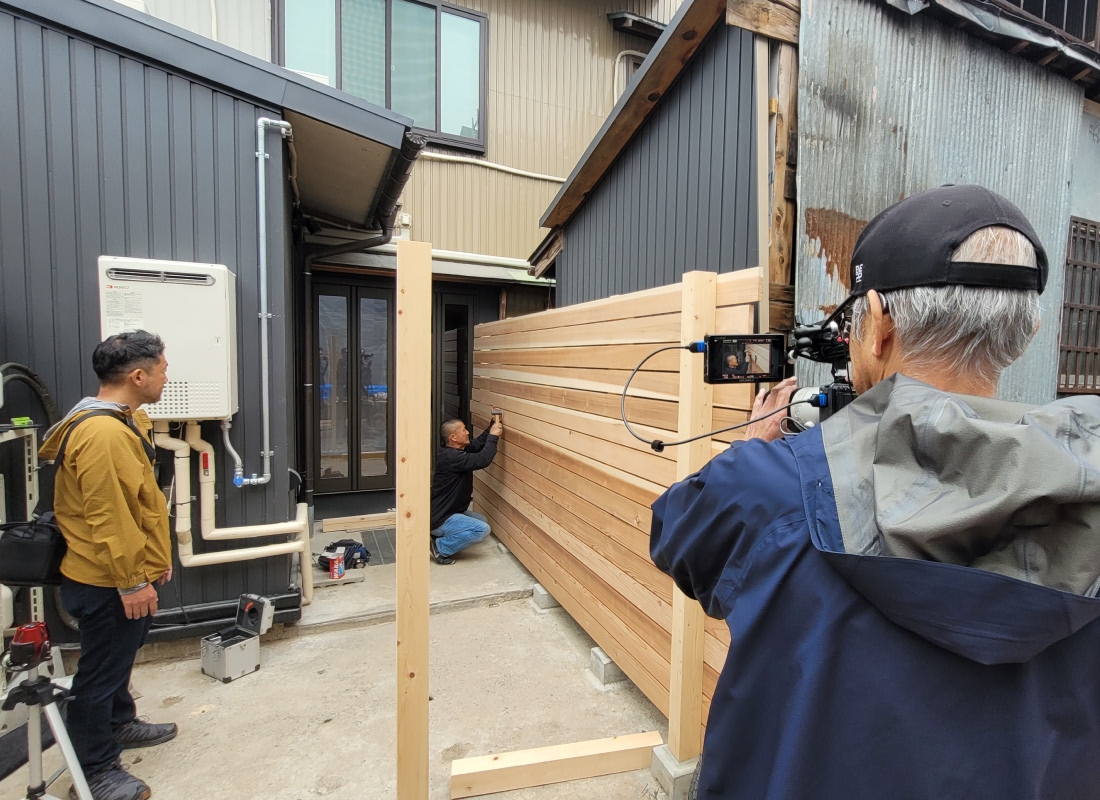
Working within an existing concrete base required careful intervention.
- Holes had to be precisely cut into concrete for each post
- Positioning was critical to maximize usable space
- Limited working area required efficient sequencing
Each decision had to balance structural stability with spatial efficiency.

Fabrication Process
The process moved between site and workshop:
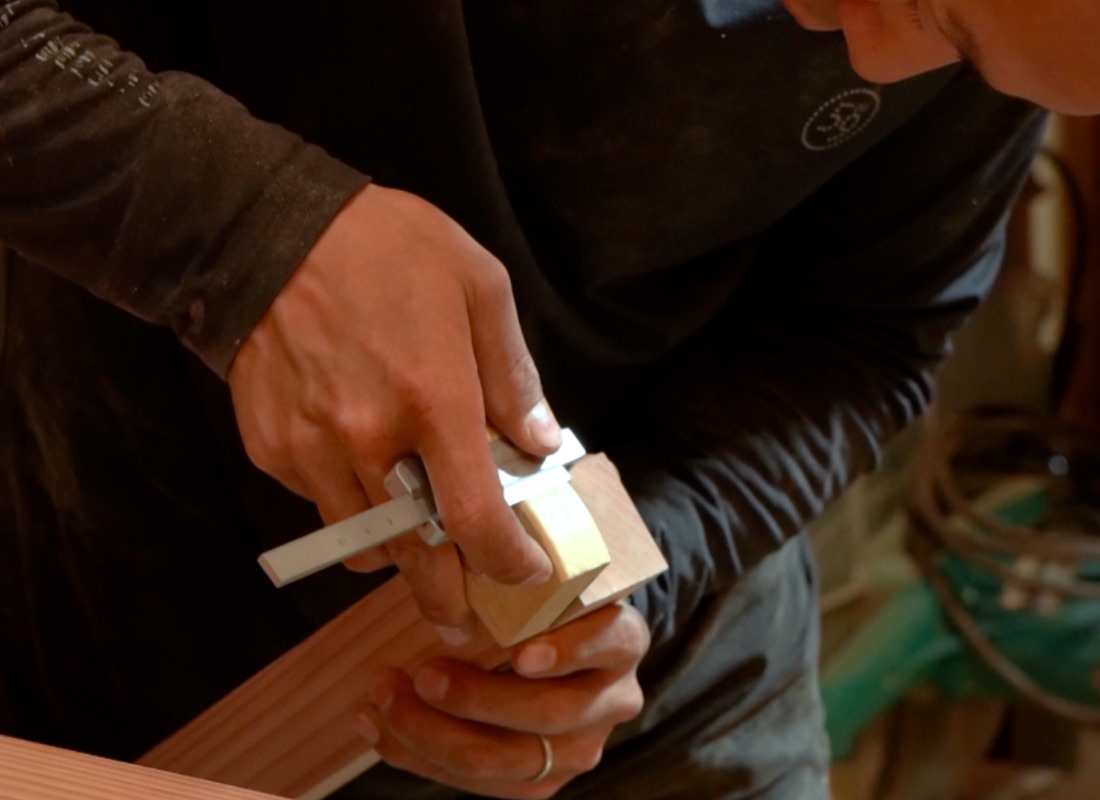
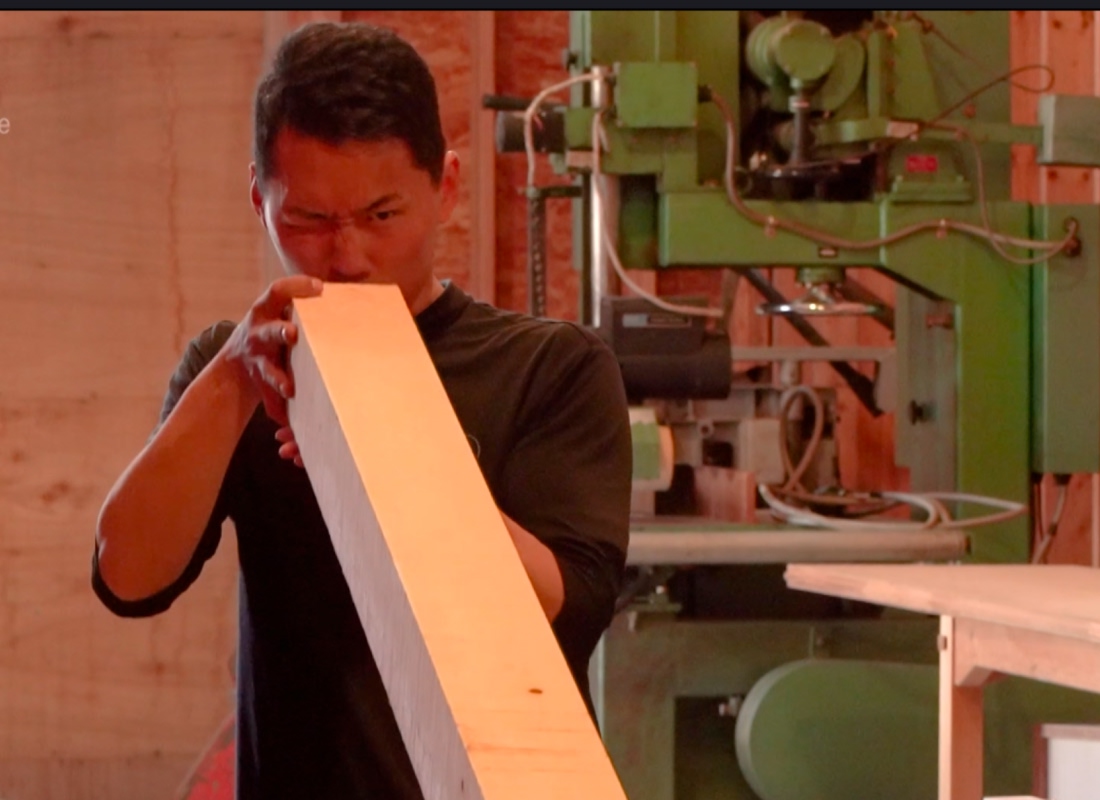
- Preparing posts and boards to consistent dimensions
- Cutting precise joinery for alignment and stability
- Installing posts into concrete foundations
- Building the fence incrementally to maintain accuracy
At the same time, filming for NHKWorld – Where We Call Home was taking place, adding another layer of awareness to the process.
Result
A simple enclosure that feels natural to the space.
The fence provides:
- Privacy without complete isolation
- A safe area for dogs to move freely
- A calm backdrop for guests to spend time outdoors
From inside, the space feels contained and comfortable.
From outside, it blends into the surrounding materials and scale of the neighborhood.
Nothing stands out, but everything works.
Project Gallery



Other Projects
Begin your project with us
Whether renovation, furniture, or design, we are ready to listen to your vision