
Hourai Brewery Tasting Table


Project Overview
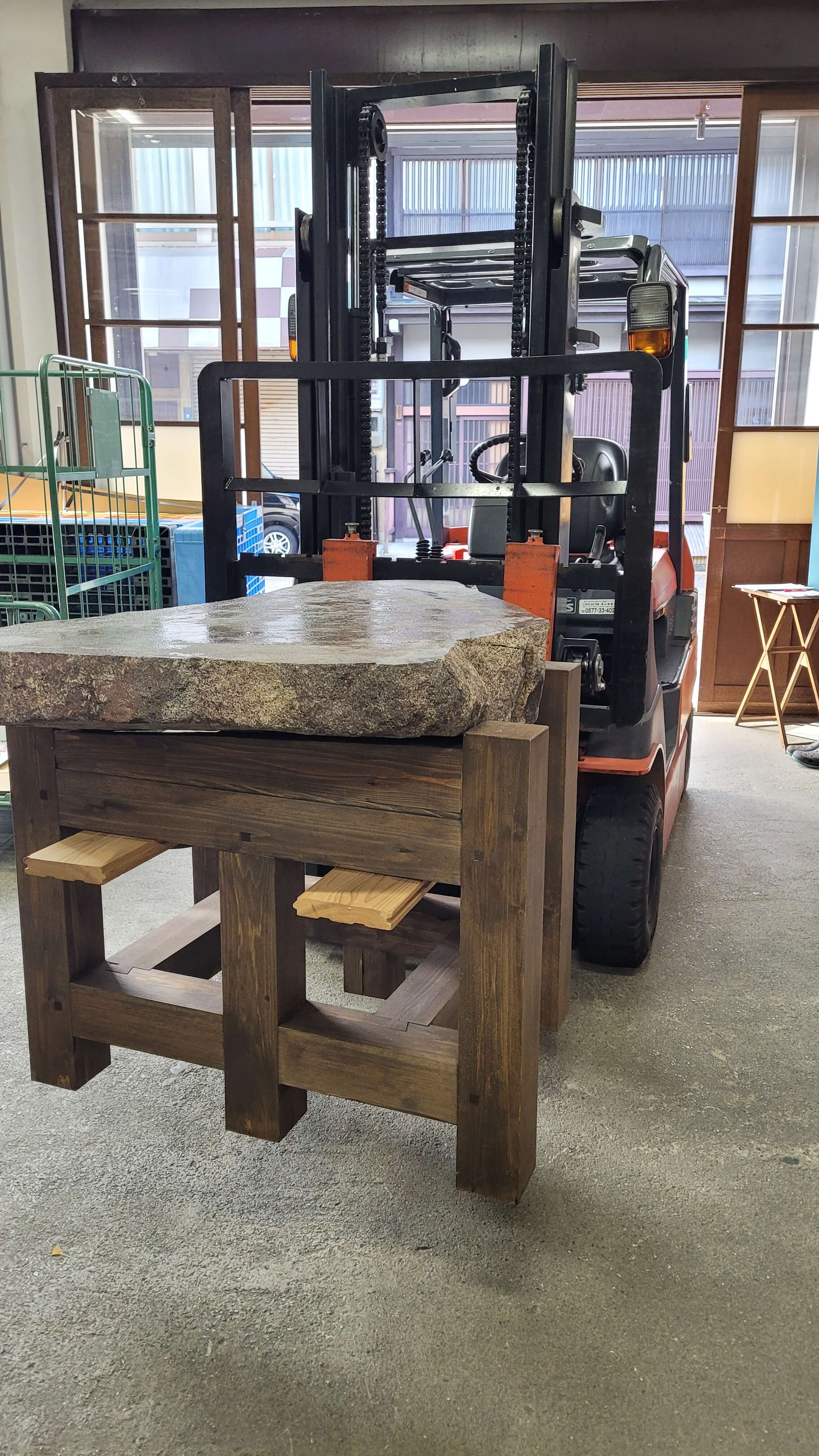
This project involved the fabrication and installation of two large tasting tables for the retail space of Watanabe Sake Brewery.
The tables were designed by an architect to feature massive natural stone slabs sourced locally in Hida. My role was to translate the architectural design into a buildable structure and fabricate the entire table frame from solid timber.
The goal was to create a table that felt grounded and natural, allowing the stone itself to become the centerpiece of the space.
Context
The tables are located inside the brewery's retail shop, where visitors taste sake and experience local craftsmanship.
Because the stone originates from the Hida region, the project reflects the relationship between the landscape and the culture of sake brewing. The heavy stone surface gives the tables a sense of permanence, grounding the tasting experience in the local environment.
The surrounding interior combines traditional Japanese materials with contemporary retail elements, making the table both functional and sculptural.
Materials
The project combines two materials that contrast but complement each other.
Stone
- Large natural stone slabs sourced locally in Hida
- Each slab weighs over 200 kg
- Left largely untouched to preserve its natural surface
Wood Structure
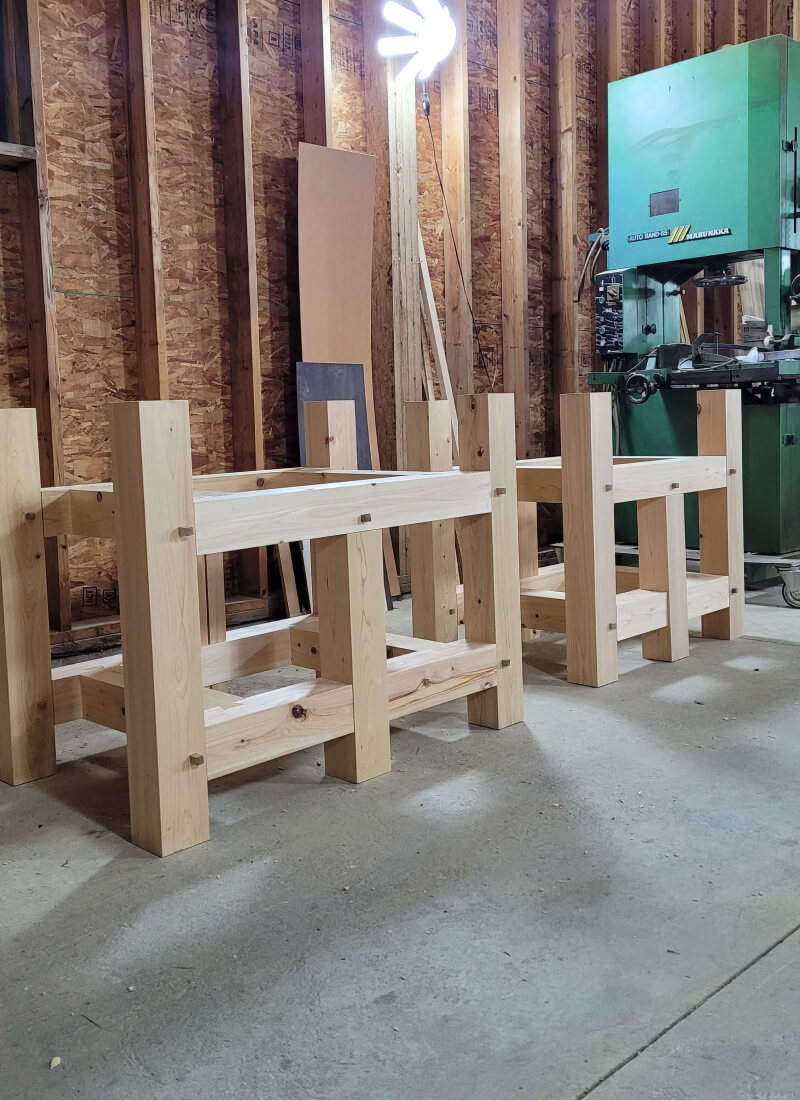
- Solid timber frame
- Traditional joinery connections
- No nails used in the structural assembly
The wood structure acts as a quiet support, allowing the natural stone to remain the visual focus.
Craft & Joinery
The entire table structure was built using traditional joinery techniques.
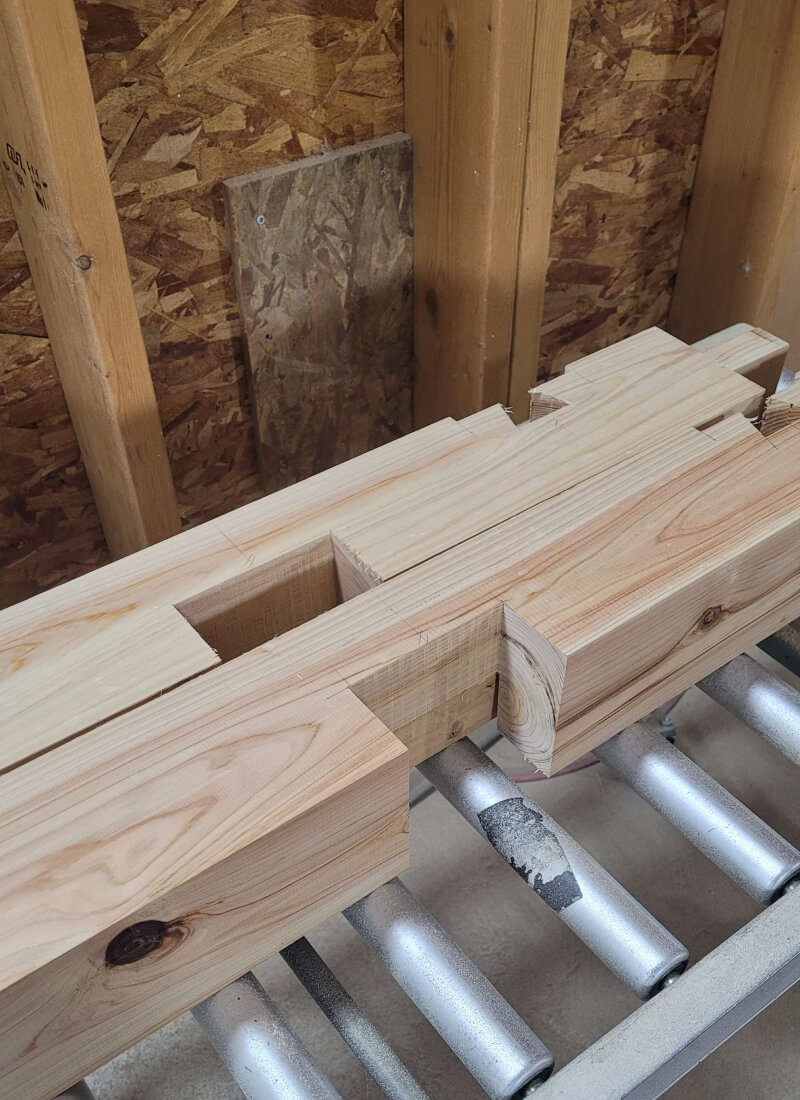
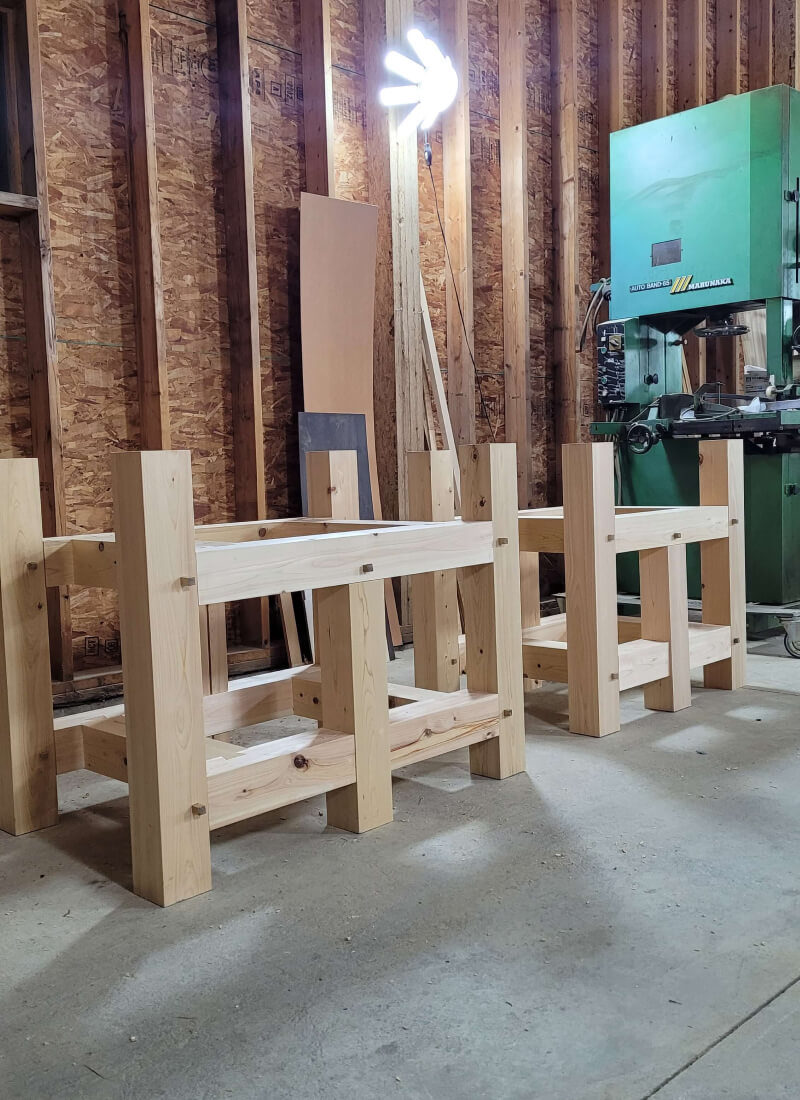
Large mortise and tenon connections were used throughout the frame, reinforced with hardwood pegs. The intention was to create a structure that is both strong and honest in its construction.
No metal fasteners or nails were used in the main structural joints.
The joinery not only provides structural integrity but also expresses the craft of carpentry through visible connections.
Technical Challenges
Two major challenges shaped the construction of this project.
1 — Leveling the Stone
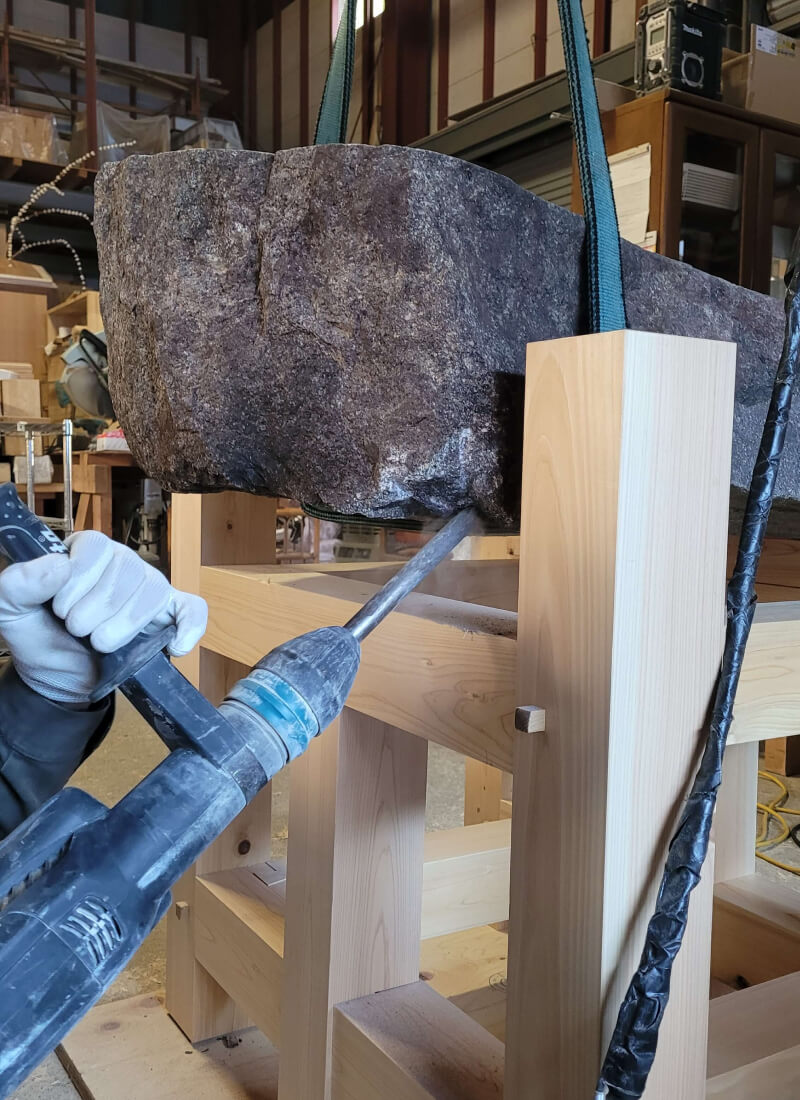
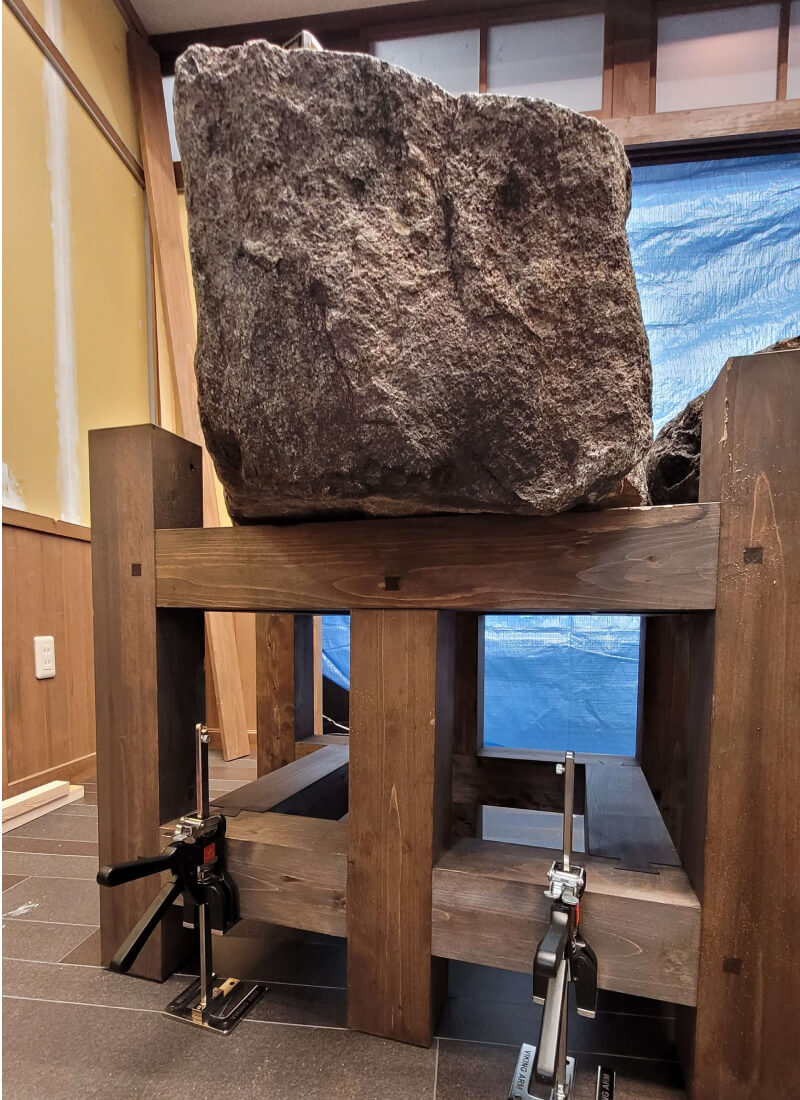
Because the stone slabs were natural and irregular, ensuring that the top surface remained perfectly level was critical.
Careful adjustments to the timber frame and support points were required so the heavy stone would sit evenly without rocking or stress points.
2 — Installing the Table
Transporting and installing a structure of this weight inside the shop presented another challenge.
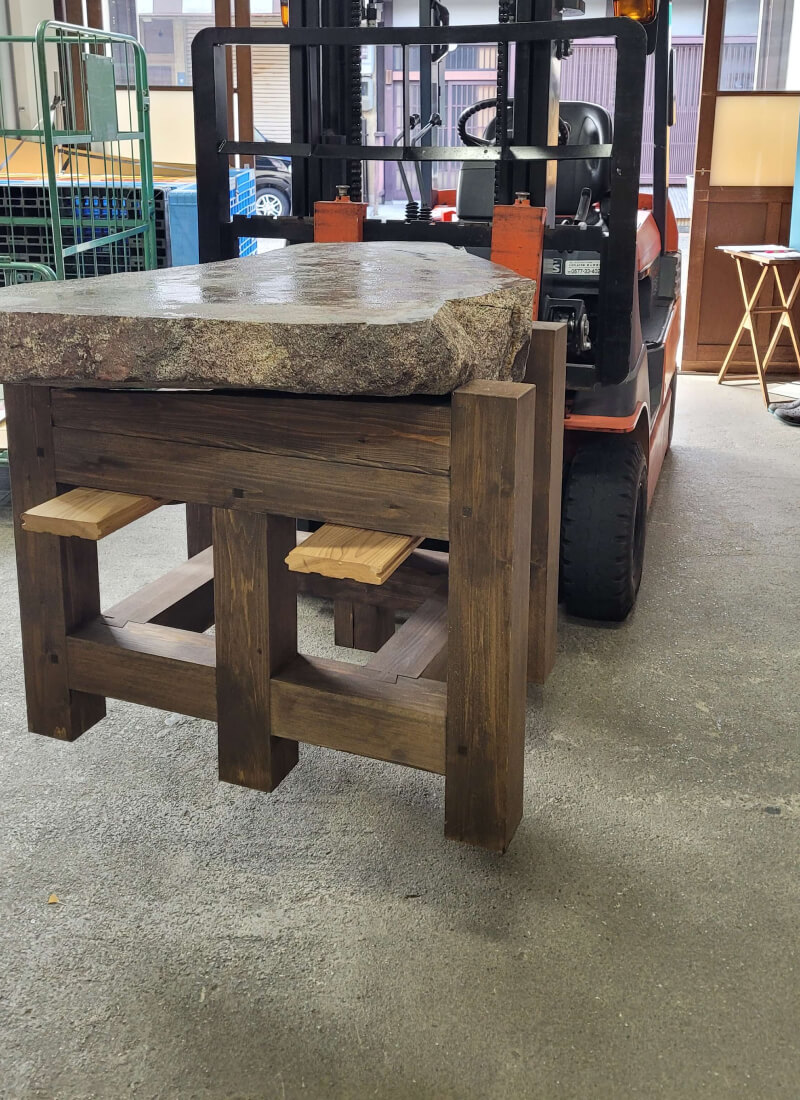
Each stone slab weighs more than 200 kg, making conventional installation difficult.
Fortunately, because the shop itself was undergoing renovation at the same time, one section of the wall had been temporarily removed. This allowed the tables to be moved into the building using lifting equipment before the wall was rebuilt.
Without this timing, bringing the stone tables into the shop would have been significantly more complicated.
Fabrication Process
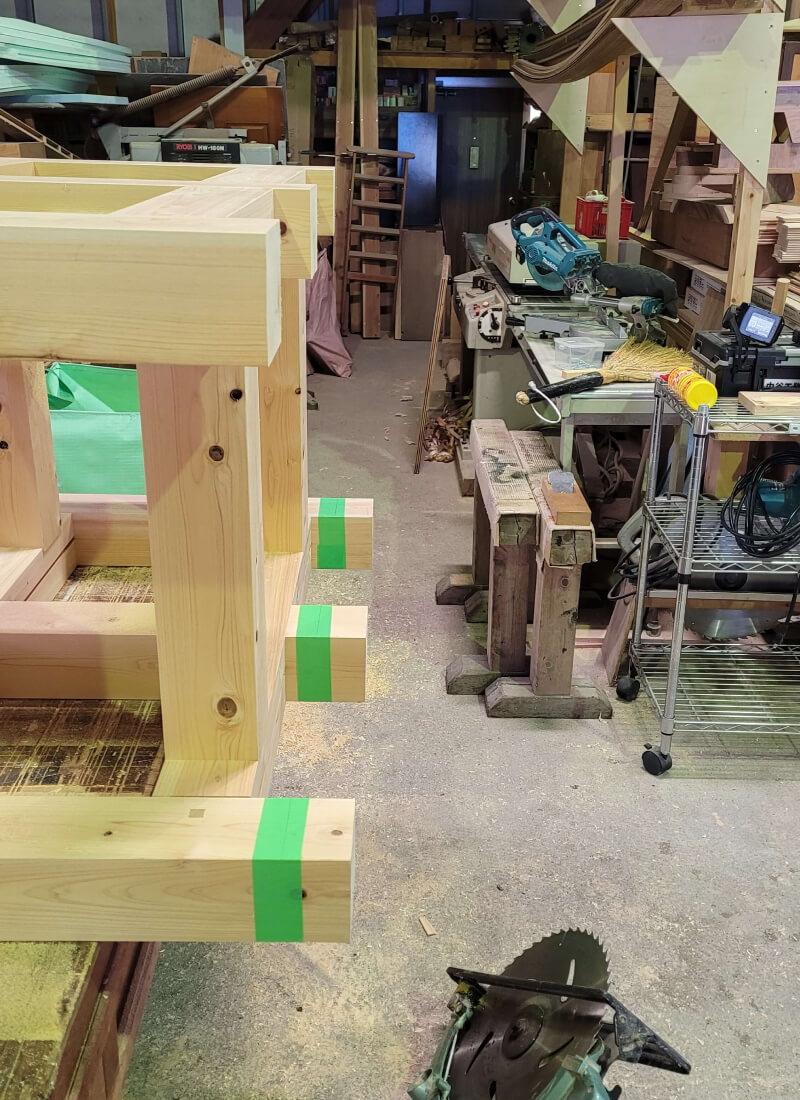
The table frames were fabricated in the workshop before installation.
The process included:
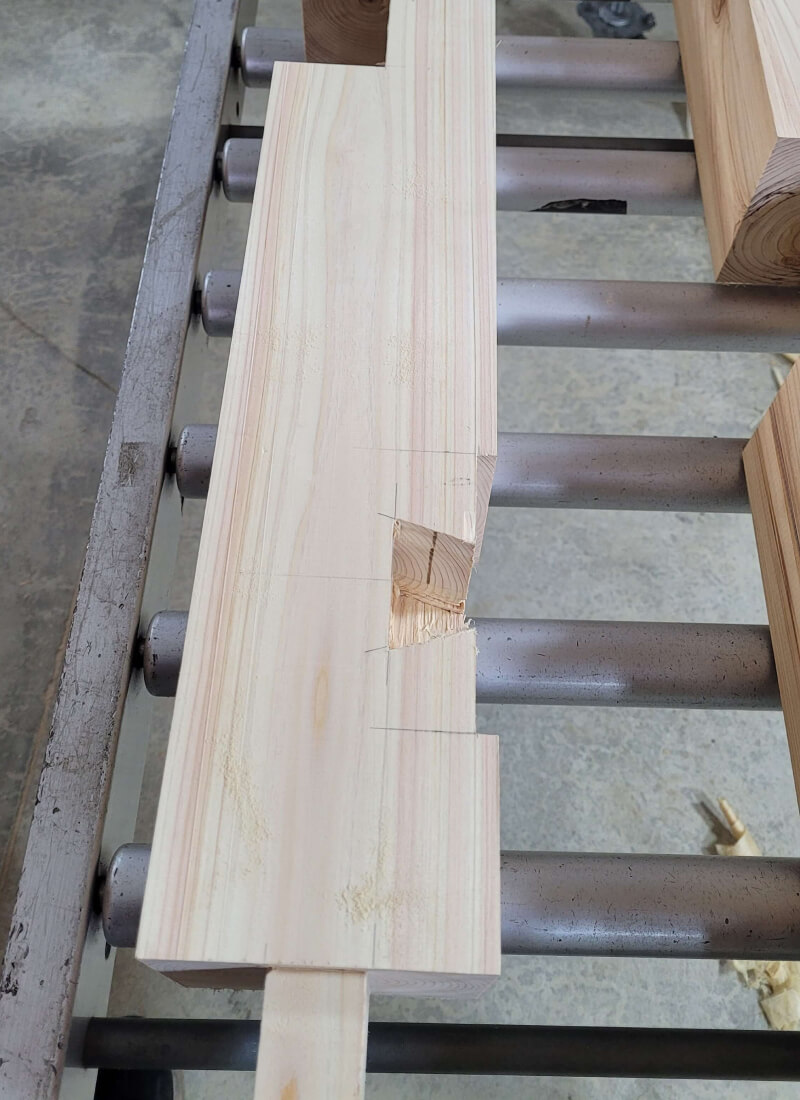
- Cutting large mortise and tenon joints
- Dry assembling the frame
- Pegging the structure
- Preparing support points for the stone slab
Once completed, the structure was transported to the site where the stone was carefully lifted and positioned.
Result
The finished tables act as both furniture and landscape.
The heavy stone surface gives visitors a tactile connection to the region, while the handcrafted wooden frame provides warmth and structure.
Together, they create a focal point within the shop — a place where visitors can gather, taste sake, and experience the materials of Hida.

Project Gallery
Other Projects
Cedar Fence for a Machiya Stay
Begin your project with us
Whether renovation, furniture, or design, we are ready to listen to your vision